December 4, 2025, Shanghai — At the 2025 National Brain-Computer Interface Conference themed "Connecting Brains, Gathering Intelligence in Shanghai," the Brainlink Lab team from ShanghaiTech University, leveraging Guoke Xinnao technology, won third place in all four tracks—emotional perception, fatigue monitoring, BCI robotic arm, and BCI racing—with their BCI car and BCI robotic arm solutions, becoming the focus of the entire event. The team's solution is characterized by low-cost, self-developed core technologies, making it the most cost-effective BCI solution in the national BCI competition, fully demonstrating the practical value of Guoke Xinnao technology in industry-academia-research integration.
Competition Background: First Large-Scale BCI Combat Competition in China
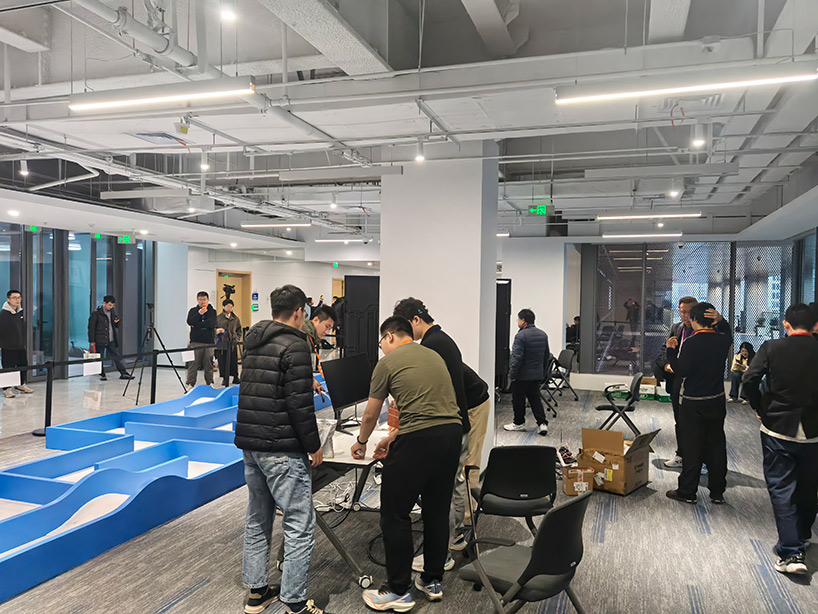
This National BCI Conference was the first large-scale, multi-track combat competition in China, bringing together 40 top teams from across the country, with an average age of 25, highlighting the youthful innovation vitality in the BCI field. The BCI car and BCI robotic arm, as core tracks, required contestants to analyze EEG signals in real time through non-invasive EEG headsets and precisely drive external devices to complete complex tasks.
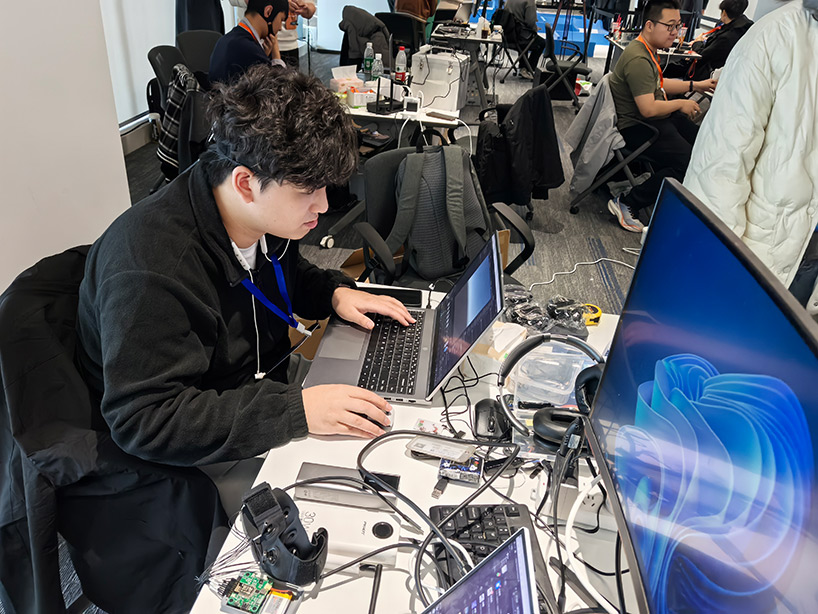
BCI Car Track: Required the car to autonomously drive through a complex 15-meter track, with the single shortest completion time within 30 minutes counted as the score.
BCI Robotic Arm Track: Required the robotic arm to sort four-colored building blocks, completing fine movements such as grabbing, moving, and placing. The system relied on millisecond-level coordination of EEG signal acquisition, intent decoding, and motion control.
Technical Breakthrough: Low-Cost Solution Achieves Efficient BCI Control
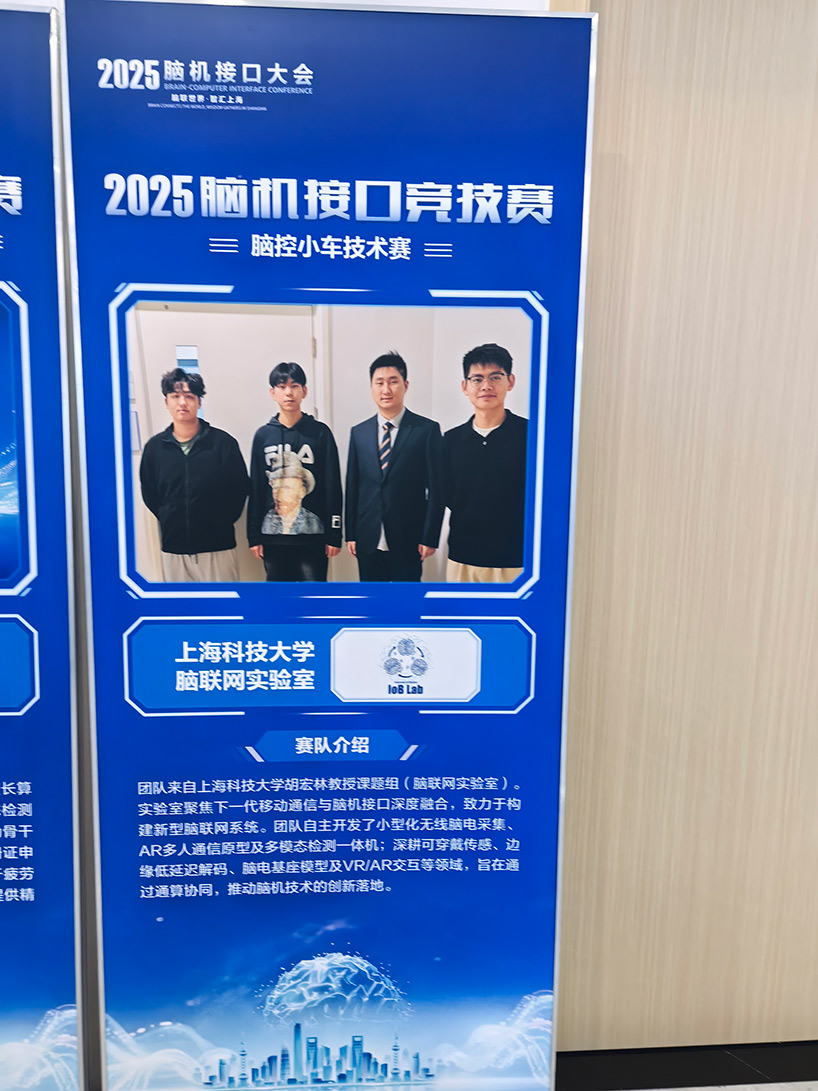
The SZT Brainlink Lab team adopted Guoke Xinnao's BCI technology as the foundation and performed adaptive optimization based on open-source hardware, constructing a highly cost-effective BCI system. Team member Ran Longjie, a first-year graduate student in Electronic Science and Technology at SZT, stated that compared with the high-cost configurations of industrial robotic arms used by other teams, their solution centers on self-developed technology, with both EEG signal acquisition technology and core algorithms independently developed by the team, significantly reducing the hardware barrier.
Ultimately, the team achieved a fastest completion time of 10 minutes in the BCI robotic arm task across three attempts; in the BCI car track, they also demonstrated stable control capabilities, becoming a representative case of low-cost BCI control at the event. Liu Haifeng, a PhD candidate in Computer Science at SZT, added that the team's faculty advisor, Professor Hu Honglin, had been conducting interdisciplinary research on BCI and 6G communication since 2016, and this competition aimed to verify the feasibility of the technology in communication terminals (such as the Brain-Net concept) through real combat.
Future Vision: Promoting the Popularization of BCI Technology
Guoke Xinnao Chairman Zhao Xi stated: “We are always committed to empowering diverse industries through BCI technology. This cooperation with the SZT team once again validates the technology’s potential in low-cost, high-adaptation scenarios.” Looking ahead, the company plans to further open up its technology and algorithm resources based on its expertise in EEG acquisition and affective computing (e.g., an earphone prototype supporting 4-type emotional value detection), helping more research teams and enterprises achieve the leap from laboratory to market.
As the first large-scale BCI combat competition in China, this event not only showcased the cutting-edge exploration of the technology but also provided new directions for the popularization of BCI applications through the practice of low-cost solutions. The cooperation between Guoke Xinnao and SZT is expected to become an important technical reference for future Brain-Net and 6G intelligent terminal R&D.


上海市松江区泗泾镇高技60中心a2