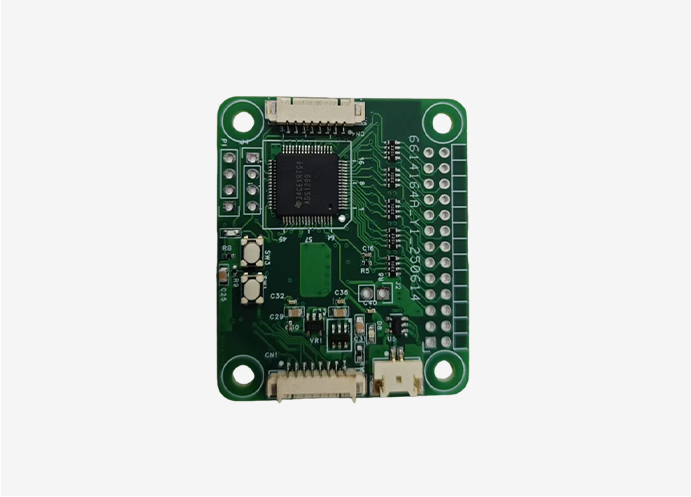
This EEG sampling module serves as a core foundational component in high-precision brain-computer interface (BCI) system development, specifically designed for multimodal electrophysiological signal acquisition and wireless transmission.
This EEG sampling module serves as a core foundational component in high-precision brain-computer interface (BCI) system development, specifically designed for multimodal electrophysiological signal acquisition and wireless transmission. Its core hardware adopts a 24-bit high-precision Analog-to-Digital Converter (ADC) that delivers exceptional signal resolution (reliability verified in medical-grade applications by mature solutions such as OpenBCI), synchronously compatible with the acquisition of various bioelectrical signals including EEG, EMG, EOG, and ECG, meeting the high-fidelity capture needs of weak physiological signals in neuroscience, rehabilitation medicine, and human-computer interaction.
In terms of transmission, the module integrates a wireless communication module (such as BLE or Wi-Fi) supporting real-time wireless data transmission, freeing users from traditional wired connections and significantly improving the device's portability and scenario adaptability. Its high input impedance (typically greater than 10 MΩ) is compatible with non-invasive collection solutions such as dry electrodes or fabric electrodes, ensuring both signal acquisition stability and wearing comfort. In addition, the module design prioritizes low power consumption and high integration, with a typical application circuit requiring only a small number of peripheral components to achieve full functionality, and single-channel dynamic power consumption controlled at the microampere level (e.g., ~125 µA), suitable for long-term monitoring and mobile scenarios.
As a research and development platform, the module supports flexible parameter configuration (e.g., gain adjustment via SPI interface, covering a range of 360× to 2720×) and provides open underlying data interfaces for secondary development and algorithm verification. Its excellent common-mode noise rejection capability (CMRR ~105 dB) and low equivalent input noise (e.g., ~1 µV) make it a key technical vehicle for laboratory prototype development, clinical monitoring device iteration, and consumer-grade BCI product optimization.


上海市松江区泗泾镇高技60中心a2